
Since the dawn of time, one has been instinctively driven by the desire for change, compelled by circumstances to adapt to different situations in order to survive. What is different now? Now the concept of simply deviating from old habits, getting out of the comfort zone is a real challenge that often arouses an immediate repulsion, contrary to what we would call normality.
“Adaptability is the key to success. If we are unable to adapt, we are
unable to progress." - Max McKeown
This substantial notion of adaptability to diverse circumstances and situations requires a lot of data, history and analysis to comprehense this attribute present or not in one’s character which partly sums up their moral values. Instead, history truly puts its stamp on the questions frequently posed in the present, sometimes answering them indirectly through past events.
Trying to draw on the history lessons we learn in high school, I will give just a few examples that support my historical point of view. Firstly, adaptation to the urban environment was one of the biggest and most drastical changes in the world. Many events contributed to this gradual development, not least the Industrial Revolution, as a result of which urbanization left its mark on the world’s population. The shift from manual to mechanized work, the fluctuation of people’s daily activities (they had to work more in the factories) made city life suddenly more crowded.
These people had no choice but to adapt to existing conditions. They didn’t have time to ask themselves, whether they wanted to do it or if they were willing or not to, they did it out of pure instinct, automatism, out of duty to themselves, out of self-interest, or sometimes they had no other choice, as society imposed it on them…
Moreover, technologies were developed for space exploration and beyond. Maybe in hundreds or thousands of years we will get to travel to other galaxies or live our own Star Wars movie, but if we manage to achieve such a feat, we will need to adapt to a new environment, in this case the cosmic space and therefore we will be highly dependent on technology, a notion that 100 years ago was alien to the world. Humans are already making serious, various attempts to colonize other planets, so it is not out of the question that a phenomenon as such chould happen at some point. However, the point here is not about travelling in between galaxies or who knows what else imagination can come up with. It is about change and the fact that throughout history, humans, in order to evolve, have adapted and accepted it. An issue often neglected today is the exact opposite of what I noted in the previous sentence. Changes are happening in the world but we remain the same, we keep the same closed mindset, maybe we do not want to open our eyes, or even worse, we do not realize they are closed at all.
Many people choose to give up on following their dreams precisely because it is about transformation, about taking risks, about leaving behind certain aspects of their life, of their personality they used to hold on to that do not help them progress, it is about taking responsibility, which scares them. It scares us. It does not mean that these fears define us. The power to adapt to the uknown, to the new, has a greater impact than what we think, it takes on infinite possibilities.
Nevertheless, what are the inter-related factors that influence a person’s adaptability? First and foremost, it lies in the emotional resilience of each person, but the good thing is that id does not remain constant forever, it can be modifies and much improved. So, we are not lost causes. We can learn to adapt, to face new challenges interwoven with our lives in multiple , divergent ways. What exactly are those ways? For the suspense, I will come back with the answer later.
The question is, what is the correlation between our ability to adjust our decisions, reactions and the external environment? After all, this article is not only addressing and proposing improvements only in our own values, but also improving the society we live in by addressing minor problems causing major effects and presenting concise and viable solutions corresponding to them. Thinking rationally, we would discover that by changing our mindset, we can change our reality. How? If each individual would adapt quickly and be open to change in favor of themselves and the population, it would create a cohesion between people's ideas and theories, resulting in the increased evolution of the world and of human species. Knowledge, science, would have a sudden and undeniable rise, due to the combination of all the theoretical and practical sources in the world. It would mean that each of us, being willing to adapt to new conditions of life, new realities, new discoveries more quickly than we have ever done before, could accomplish almost anything we set out to do in a shorter and more efficient time. Do you realize how far we would go, how fast we would develop? If every one of us stepped out of our comfort zone in the pursuit of progress, we could start to hope for the possible colonization of Mars, for instance, or any other great accomplishment that is currently only in the far-future planning stage. What would happen if we sped up the process?
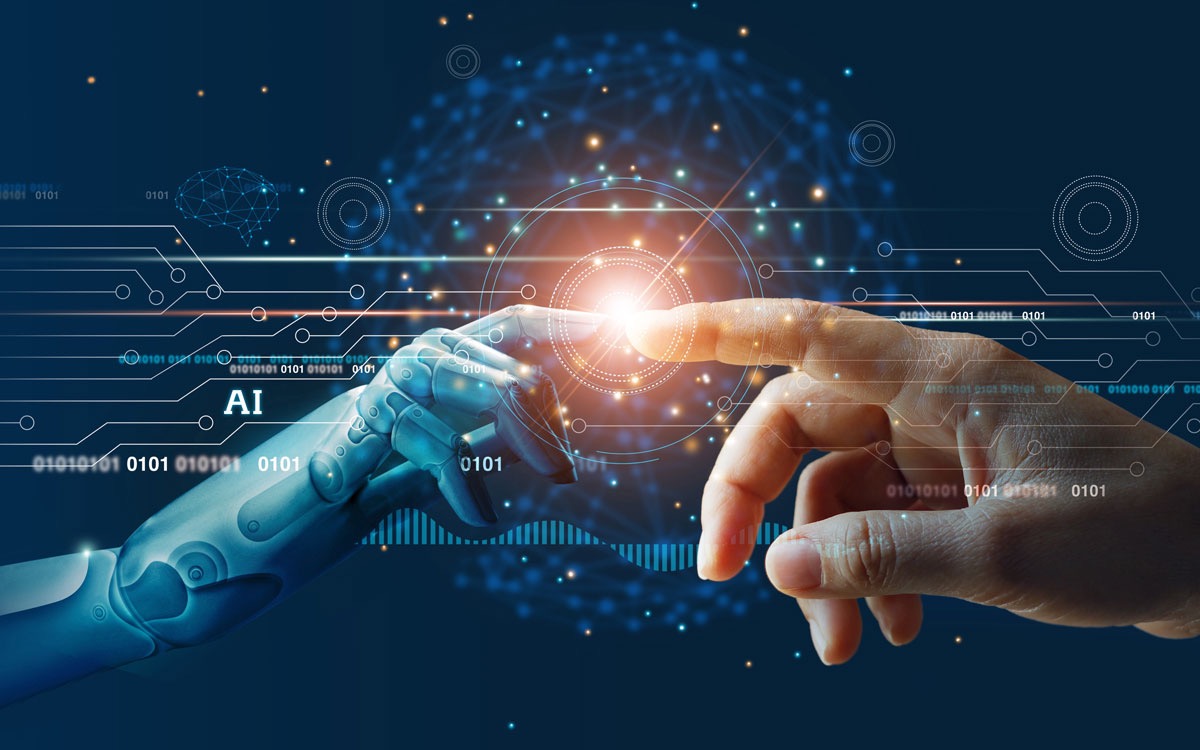
However, could we still consider progress as a human necessity for evolution if it is not counterbalanced by moral values and human ideals? The craving for continuous progress, in the absence of fundamental human needs (family, faith, kindness, emotions, feelings), could not distinguish us from robots at all. That is exactly why the search for perfection where it does not exist can lead to the alienation of these essential human ideals. In everything there must be a balance, a balance between needs and desires. When fundamental, basic emotional needs are lacking, we may as well stop trying to create robots, as we have already become one, we may as well stop to polish artificial intelligence according to the human model because we are already the ones who embody it. In concluding this idea, we must always think about cause and effect. This is the only way to realize whether the effect/outcome of our choices and actions is the preferred, beneficial and human one.
Now I feel compelled to come back to the ways to deal with the lack of circumstantial adaptability since no, I have not forgotten about them. The degree of malleability with regard to the unpredictable, the unknown, depends very much on the discernment we have in critical situations.
Supposedly, we are put in a situation where we have to make a quick, spontaneous decision, and the overwhelming pressure that is increasingly making its presence felt forces us to find the solution we think is right to the problem in a split second, instead of having time to think, to analyze the situation from all points of view. In this case, the experience of working and thinking under pressure does indeed count, but an even more decisive aspect is discernment, the fact that although we may not have the necessary experience, we know how to adapt instantly to the situation and circumstances in which we are placed. In my perspective, such a quality can be developed through lifelong learning, and I don't necessarily mean just learning at school, I'm thinking more of learning from experience, of stepping out of our comfort zone to do things that are important to us so that when we encounter them again, we know how to proceed. Wanting to put ourselves in certain difficult situations at a young age (for example, the courage to speak freely in public, even if it seems difficult and you are afraid to do it because it will help you later in your career) so that we can have tremendous character and intelligence development later on, when we end up asking ourselves what we want to do in life, what career we want to pursue and what we want to leave behind.
Reasoning, organizing ideas and thoughts, learning, are all corresponding elements of rational intelligence. In contrast, the reactions we have to various changes and events in life, and the feeling of fear that stops any motivation or attempt to adapt, are part of emotional intelligence. What role does fear play? It definitely fulfills a vital role because fear can induce an immediate reaction to imminent danger and, conversely, joy can reward adaptive behaviors. It creates a kind of indirect proportionality with the progress we have been discussing so far, but it should not necessarily be seen as a negative aspect, because fear often motivates people and makes us stronger, and when we overcome it, we can become invincible.
Hi, this is a comment.
To get started with moderating, editing, and deleting comments, please visit the Comments screen in the dashboard.
Commenter avatars come from Gravatar.